The Audience Has The Mic
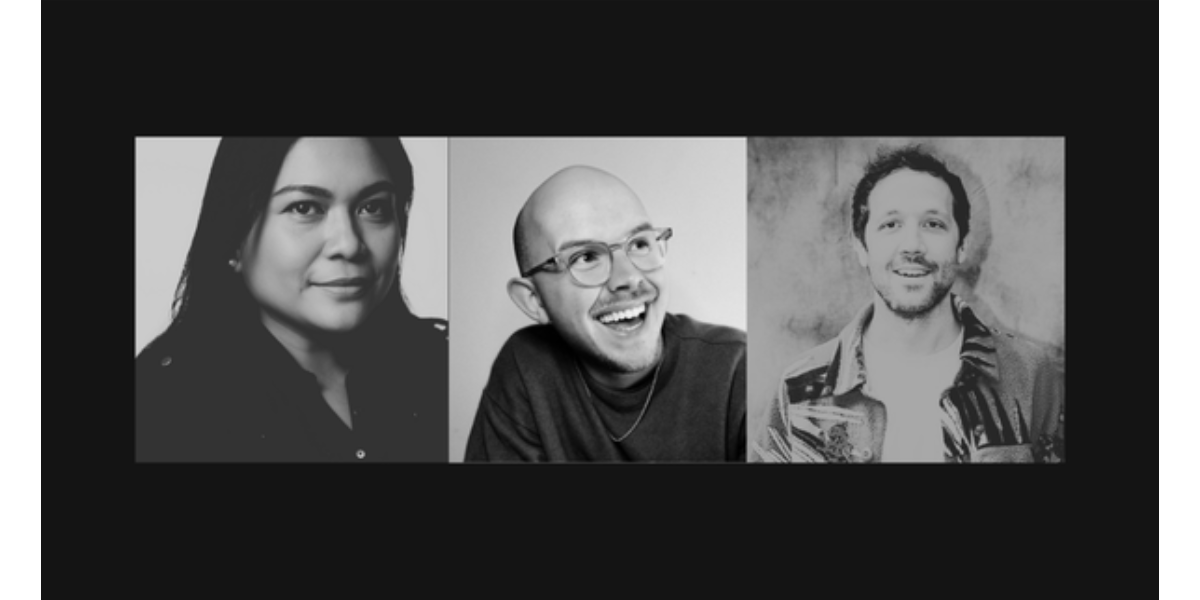
Exploring the new era of participatory audience culture and what that means for the future of creative work with Executive Creative Directors: Dillah Zakbah from Fold7, Alex Williamson from OKCool, and ITV Creative’s Tom Houser.
The way we consume media has dramatically changed, and we’ve all had front row seats to our own pattern shifts. Now, we’re seeing that reflected more and more in the way we create too. For me, the clearest thing within the chaos is that attention now has to be earned, not assumed.
For decades brands and agencies created for an assumed audience; an audience they believed they knew and who they believed cared about their content regardless. But what about now I hear you cry? Audiences are subjected to a constant feed of content (or slop, depending on how you view it) and because of that are now curating their own viewing. Attention is now cultural currency; people are spending it in their own ways and shaping their own viewing narrative in real time. If something doesn’t fit they are swiping before they’ve even reached the hook.
This shift means that brands must think, strategise and communicate differently. Ads still reign supreme at telling lots of people a simple message, however this message needs to shape shift to meet the audience where they are and do so with purpose.
It’s a turbulent time to be an Executive Creative Director within the advertising industry; so, I spoke to three leaders leaning into the new creative spectrum, and rewriting the way ads exist in the world. One from a social-first agency, another leading the charge of an in-house creative studio at a broadcaster, and the third rewriting the rules at a more traditional shop.
What's happening right now?
Firstly, let’s get into the current state of play. What they, as Creative Leaders, are already seeing and how they are adapting their approach accordingly. Despite differing backgrounds, all three Creative Leaders are aligned in their approach to new audiences. So let’s get into the current state of play, I asked what they are already seeing and how they are adapting their approach accordingly.
‘Audiences are not viewers anymore. They are participants, ' explains Dillah, Deputy Executive Creative Director at Fold7, ‘you can’t just hand people a campaign and hope they’ll applaud. You need to be able to handle the audience having the mic.’ Handing your audience the mic means you have to be really truly ready for their feedback - even if it is tearing your work to shreds. In my opinion, strong research and insights way before the creative is even considered will be the anchors of this landing well. Dillah is honouring this by creating work that ‘feels less like a monologue and more like an invitation’, piquing interest rather than forcing listening.
Alex Williamson, Executive Creative Director of OK COOL echoed this notion of audiences now as participants saying he is ‘spend(ing) more time in the communities he is trying to connect with’ and that clever marketing alone will no longer cut it. He expanded on this with, in my opinion, a key point:brands must now bring true value to people in order to be chosen.
Audiences are leaving the doomscrolling behind, and with the power in their hands they are now spending time on media that actually truly adds something to them which could be in the shape of entertainment, inspiration, education, the list is kind of endless.
ITV Creative’s Executive Creative Director, Tom Houser, shared that ideas now need to shapeshift to meet their audience - ‘every campaign now needs hooks and ideas that stretch across social, influencer, experiential, CTV and beyond.’ Gone are the days of the TVC reigning supreme and being 90% of the campaign focus. He referenced how working at one of Britain's most-loved broadcasters has only amplified the huge shifts we’re seeing on how audiences consume with heritage platforms being hit first. The ones first to listen and adapt will be the ones setting the new pace.
In short, it’s safe to say the biggest media movement we are seeing is that the audience now has the power, or at least the majority of it. They are no longer waiting for a seat at the table but demanding one with a list of dietary requirements at the ready.
So, what's going to happen next?
With the era of participatory media firmly unfolding before us, and the comfortability of tradition giving way, I wanted to explore what strategies we’re betting on that will lead to real creative advantage in this new life cycle of advertising.
At Fold7, Dillah said she’s ‘embracing the chaos’ and experimenting in undefined, unpolished spaces where culture hasn’t yet been neatly branded or over-engineered. It’s riskier, but that’s the point. It’s a chance to redefine the spaces in which brands can show up and reset the standard for communication. Tom Houser has taken a similar approach - not to chase chaos, but to make space for it. He is resetting the standard and placing his bets on structural change working to unlock fresher and faster work. In his department he is challenging the traditional structural rigidity and shared that they are ‘taking down the walls between disciplines to properly mix’, stopping creative work getting siloed by phase and opening the team up to more learning through osmosis.
Structural change is something that is also ringing true for Alex, ECD at OK COOL. He is predicting that Creative Duos will be on the rise, but not how we historically know them. Alex sees the new pairing wave being ‘someone from brand work and someone who lives in culture’. When every platform, every meme, and every fandom is its own ecosystem, the creatives who truly live and breathe culture are the ones who stay ahead. For him, the next great idea won’t come from a brainstorm but from a comment section, which is why having creatives that live in culture is key.
From what we’ve discussed it’s pretty clear that the future of creative work won’t be built on reach; it’ll be built on belonging. As audiences shift from passive viewing to active participation and personal curation the smartest brands are the ones understanding that connection is the most important link. Tapping into what people already care about and creating a space for them to express it.
What are we most excited about?
To close, we spoke about what’s most exciting in this new creative landscape and where the biggest brand opportunities might lie. The new norm is yet to be written and the state of play is more even than ever, and personally, I’m more into it than ever.
It’s all about the freedom for brands to behave less like brands and more like; fans, friends, collaborators, meme-makers, hype-starters. Dillah told me it’s about creating work that actually moves with culture, rather than broadcasting it for all to hear and not feel. She closed our conversation with the perfect sum up - ‘the real creative opportunity is to stop trying to control the stage and to instead set the scene so people want to jump in.’
The excitement of brands acting less as they previously have was shared by Tom, too. He sees now as the perfect time for creativity to move closer to the brands themselves, and that it’s the ‘end of the middle-men’ when it comes to making outstanding creative work. Less layers, less hoops to jump through and less pointless reviews. The rise we are seeing of in-house creative studios mirrors this too, and with these studios being perceived with less snobbery and more openness. More creatives than ever are wanting to take their talent in-house, and I don’t think that is a coincidence.
For Alex, it all leads back to the audience having the final say on what is good versus what isn’t. It’s a time for brands to revisit how they score creativity and for them to focus on what the audience actually likes rather than what the rest of ad-land likes - summed up by Alex here; ‘this forces brands to make truly good work, rather than getting distracted by work our industry likes, but people don’t.’
We are seeing a flattening of the creative food chain that often rewards speed, relevance, and cultural fluency over old school processes and structures. Marrying those points with craft and true brand and audience understanding is the sweet spot, and what agencies and brands alike are striving for.
Creative work can no longer be seen as only a one-way broadcast, and now more than ever it must invite engagement, adapt fluidly across platforms, and deliver meaning that really resonates with its audience. As industry leaders from Fold7, OK COOL, and ITV Creative note, the power dynamic has shifted: audiences now hold the mic, and the brands that listen, respond, and evolve will lead the new era of connection.
The most forward-thinking creatives are embracing chaos, breaking down silos, and collaborating with those who live in culture to create work that moves with people, not at them. As tradition gives way to participation, the real opportunity lies in brands acting less like marketers and more like collaborators; setting the stage instead of controlling it. The brands owning this will be the ones that audiences choose to step into.
.jpg)